Tuesday, July 24, 2012

Higgs discovery further explained

Let’s be clearer on the meaning of the claims made earlier this month:

“We observe in our data clear signs of a new particle, at the level of 5 sigma, in the mass region around 126 GeV...” said ATLAS experiment spokesperson Fabiola Gianotti...

“The results are preliminary but the 5 sigma signal at around 125 GeV we’re seeing is dramatic. This is indeed a new particle. We know it must be a boson and it’s the heaviest boson ever found,” said CMS experiment spokesperson Joe Incandela.

CMS is, of course, the Compact Muon Solenoid experiment at CERN’s LHC. They’ve issued their own press statement, which illuminates further:

CMS observes an excess of events at a mass of approximately 125 GeV with a statistical significance of five standard deviations (5 sigma) above background expectations. The probability of the background alone fluctuating up by this amount or more is about one in three million.

And the ATLAS particle physics experiment at LHC, in its own press statement,

...puts the significance of the signal at 5 sigma, meaning that only one experiment in three million would see an apparent signal this strong in a universe without a Higgs.

Now, pardon me while I warp over to a universe without a Higgs to confirm that. (I may be some time.)

Labels:

Thursday, July 05, 2012

Higgs boson: implication explicated, peer-review vindicated

The scientific and wider communities have been a-buzz with news of the discovery of what’s believed to be the elusive Higgs boson.

The search began almost 50 years ago in 1964 when Peter Higgs postulated his eponymous boson.

What’s not often appreciated is that the Higgs boson, as an ‘implication’ of particle physics, was considered so ‘completely obvious’ that it did not appear in the first draft of Peter Higgs’ 1964 paper. As Frank Close of Oxford University explained...

[I]n the first draft of the paper that Higgs wrote he didn’t even mention it, and the referee turned the paper down. And then Higgs thought, maybe I’d better think of some implications, and he added this extra implication which is now the boson.  So if the referee hadn’t turned the paper down, even Higgs might not have mentioned it.

Thus, the boson first appeared in the scientific literature almost as an afterthought, helped along by the lately-maligned peer review process.

Congratulations to Professor Higgs and to the LHC team at CERN on the occasion of this momentous leap forward.


UPDATE

More background...

Scientists had for years been working on understanding the building blocks of the universe — Higgs disagreed with them all, but he felt as if he were stuck. One day, on July 16, 1964, he read some new research papers.

“I looked at one, realised what it meant, and then jumped up and shouted out loud, 'Oh shit!’,” he said in an interview in 2008.

This moment doesn’t have the elegance of “Eureka!” but it shows the spark of creativity involved in his mental breakthrough. In a fever of excitement, Higgs spent the weekend walking the hills outside Edinburgh like a latter-day Wordsworth. “When I came back to work on Monday, I sat down and wrote a new paper as fast as I could,” he recalled.

The first paper was printed but ignored; the second was initially rejected. Pig-headedly, he went on, telling himself and others that they clearly hadn't understood it. In different parts of Europe, five other physicists were reaching the same conclusion. They worked in teams; Higgs was the only one working and publishing alone.


UPDATE 2

The Higgs Boson Explained from PHD Comics on Vimeo.

Labels:

Monday, June 18, 2012

Not yet done to death

The latest on the ANU death threats saga is that Australian National University has “stymied” a further FOI request by “demanding” nearly $40,000 to carry out the request.

The latest request is by the same guy whose previous FOI yielded 11 emails for the wrong time period while attempting to either verify or debunk supposed events that, anyway, were based on erroneous reports from the ABC and other outlets (including News £td, a fact that apparently still eludes The Australian).

So far as I can gather, the FOI guy’s motive for pursuing this has been his personal perception that the death-threat reports “have been used as a way to tar all critics of the climate consensus as being a bunch of dangerously unhinged lunatics who would resort to sending death threats...”

Essentially, it offends his vanity that his anti-climate-consensus cause may have been sullied by “a tiny minority of disturbed individuals.” Personally, I can see why ANU would want to discourage FOI requests that verge on the trivial or vexatious.

As a (qualified) supporter of the climate consensus, however, I can report that my own vanity was not offended in the least by a recent report in The Australian by Chris Merritt that prominent climate sceptics had been subject to abuse and threats. I’m happy to allow that there are whackos in any camp.

Nor was I particularly offended that the report, headlined as “Death threats just par for the course,” detailed nothing (in relation to the climate debate) that could seriously be considered a death threat.

The only example that would remotely qualify was an instance where “a filmmaker used Twitter to urge his followers: ‘Let’s assassinate Andrew Bolt.’”

Indeed, that kind of thing is stupid and offensive but nevertheless fairly insubstantial on the threat index, since it’s quite obviously public spleen affected by an identifiable individual.

Merritt also noted,

Sydney Daily Telegraph columnist Tim Blair says he has received “death wishes” rather than death threats. ... Most of this material arrives by email and while they are abusive, Blair says they are not real death threats.

Still, if Merritt and The Australian want to headline all this as “Death Threats,” then all their recent quibbling over the nature of threats to Australian climate scientists would seem somewhat small and hypocritical.

Labels: , , ,

Tuesday, June 05, 2012

Argument clinched

QED...

That’s almost three months without any increase in temperature.  This clearly falsifies the theories of climate scientists and means we should ignore anything they say.  If you disagree then please stare without blinking at these lines until it sinks in.

And in case you can’t believe what’s in front of your own eyes, there’s a graph as well...

Labels: , , ,

Saturday, June 02, 2012

The Australian normalises abuse

Non-paying customers visiting The Australian’s website today may read:

Death threats just par for the course
Chris Merritt, Legal affairs editor
June 02, 2012 12:00AM

Death threats and vile abuse are real. They infect the daily lives of key players in the debate over climate change. But it's not what you think: the main recipients of this torrent of abuse are not climate scientists.

Paying customers may read the full article, which is essentially a pious reformulation of Tim Blair’s throwaway line that the odd murder of scientists in Europe “rather puts local claims into perspective.”

In Merritt’s version, those who out-man wimpy Aussie climate boffins are not the dead nuclear scientists in Europe, but intrepid Aussie journos who “are the inheritors of that great tradition in which Western civilisation has encouraged criticism of the orthodoxy in order to expose its flaws.”

These are mostly people who happen to be Merritt’s fellow employees of News £td such as Andrew Bolt and Tim Blair, not to forget his boss Chris Mitchell.

These and others have all been on the receiving end of abusive and threatening approaches from unhinged critics. In a couple of cases, going back a decade or more, there have been assaults and even gunplay.

The key contention in Merritt’s piece is that climate scientists are in fact “players” in the “public policy debate.”

Thus, “The abuse directed at climate scientists, bad as it was, needs to be kept in perspective.”

Well, this is just appalling. Taken to its logical conclusion, Merritt’s reasoning makes those murdered nuclear scientists in Europe “players” in a “public policy debate,” therefore fair game for abusive treatment at the very least.

Rather than quelling the flames of intolerance, Merritt’s piece tends towards normalising abusive and threatening behaviour in public debate.

But what’s at least as bad is that Merritt has equated the role of climate scientists with that of the journalists he’s lionised.

Climate scientists work at producing and interpreting data that informs what is, after all, an orthodoxy — that is, a widely accepted consensus.

By contrast, journalists such as Bolt and Blair work at pushing the envelope, often railing against perceived orthodoxies and sometimes inflaming their readerships to, for instance, promulgate conspiracy theories that demonise and dehumanise the targets of their ire.

In terms of their status as “players” in public policy debate, such ‘journalists’ are several orders of magnitude above scientific workers.

Noting James Delingpole’s complaint about a “run-in with a prickly ABC talk radio host,” ABC managing director Mark Scott observed:

I am sorry that he did not feel that the robust questioning he got on the ABC was the kind of questioning he wanted. But he does present himself as contrary and running against conventional wisdom, and that is what you get.

To extrapolate from that: News £td and its employees need to be much more careful about what they wish for, and what indeed they help enable.


P.S. Astute readers will note that Merritt in this article has finally conceded for his newspaper that for which it has long been in apparent denial.

Yes folks, there has been “abuse directed at climate scientists,” and it “was bad.”

If only they’d said something like that a couple of weeks ago and maybe even elucidated just a little, it might have saved a lot of tiresome to-and-fro.

Labels: , , ,

Thursday, May 31, 2012

Energy driven II

Alluding to the climate science death threats controversy here in Australia, Tim Blair reckons that the deadly activities of eco-anarchist groups in Europe “rather puts local claims into perspective.”

Thus, if that mother who was sent threats of violence against her children thought she had problems, she should try being actually shot dead. See how she likes that!

You see, those “local claims” are simply an artefact of energy being driven into the climate debate.

Or, as one of Andrew Bolt’s commenters put it, “real-word [sic] robust public scrutiny and criticism” (Wake up Australia of Pennant Hills, Tue 29 May 2012, 10:38am).

So, Australia’s climate boffins need to just STFU and cop it sweet, because their whining is simply driving more and more energy into the climate debate.

They wouldn’t want things to get yet more real-worldy and robusty now, would they?

Al Capone could have put it somewhat more succinctly, but we are after all civilised people here.

Labels: , , , , ,

Wednesday, May 30, 2012

The Australian’s shame over death threat emails

It just goes on and on — an editorial today in The Australian demands: “Correct your errors, Mr Holmes.”

On May 24, the ABC website finally admitted what was reported on The Australian’s front page on May 3 — that emails at the centre of the original story “were found by the Privacy Commissioner to contain abuse, but not overt threats.”

As correctly pointed out by Holmes over a week ago, the emails in question were not “at the centre of the original story” at all; rather, they were garnered from a period a year or more after the incidents which prompted the relocation of ANU staff.

At any rate, one wonders whether The Australian considers it at all significant that ANU people were still evidently receiving abusive emails a year or more after having to be relocated due to threatening incidents.

The Australian, Mr Holmes claimed, “looks worst of all” among the media organisations involved — for enlightening readers with accurate reports that included the full facts about a significant story.

So then, what’s “accurate” about ascribing centrality to a bunch of emails that isn’t warranted by the plain facts. And then headlining that death threat emails had been “debunked”, when there’s been ample credible material published to warrant real concern.

Labels: , ,

Saturday, May 26, 2012

Scepticism and denialism

Further on the ANU climate-death-threats controversy, The Australian’s legal affairs editor Chris Merritt has today fired off another desperate salvo at the ABC and Media Watch.

He gives voice inter alia to the concerns of a handful of committed campaigning climate sceptics who seem unhappy with the ABC’s continued refusal to demur to the proposition that there were no death threats to any Australian climate scientists ever, period.

I have nothing to add to what I’ve already noted about all this, except to note that the “threatening incidents” towards ANU staff, established as occurring in late-2009 and early-2010, took place in the context of the Copenhagen climate summit of December 2009, culminating in relocation of the ANU staff in February 2010.

Keen observers will recall that time was characterised by somewhat overblown assertions in the populist media regarding the Copenhagen ‘agenda’.  For instance, consider the following from an associate editor of a major Australian metropolitan daily:

To say that Leftist groups are using the global warming scare to further their dreams of world government is not a conspiracy theory but the literal truth...

Note that what was being considered there were draft treaty arrangements for mitigation of what the Australian Government then recognised (and presumably still does) as the most pressing moral challenge of our time.  The world is planted thick with sundry treaty arrangements, from NATO to the European Union to the WTO.

The most-read columnist proceeded to conflate those draft treaty arrangements with conspiracist notions of world government; then served up the reeking confection to a readership primed with his daily rants against Teh Left Who Want to Oppress You; and, moreover, a readership sometimes inhabited by a minority but vocal lunar fringe.

Fast forward to today and one finds that one of most strident and venomous critics of the ANU death threats “smear” is that very same most-read columnist.

Well, who could blame someone for being in denial about having unwittingly helped feed something so ugly?

Labels: , , ,

Tuesday, May 22, 2012

Energy driven

On ABC TV’s Media Watch last night, Jonathan Holmes made a sterling attempt to unravel the controversy over alleged death threats to climate scientists in Australia.

It’s much as I suspected: A concatenation and endless loop of misreporting, claim, counter-claim, self-righteous indignation, partisan posturing, etc.

From the material presented by Holmes and the Media Watch team there can be no doubt that a number of climate scientists in Australia have been subjected to abusive and threatening approaches — whether by email or other means — by some of the more unhinged exponents of climate ‘scepticism’.

Yet some prominent and even not-so-prominent mass-bloggers are still in denial on that point. Andrew Bolt still wants the story to be about who said what to whom and when. He simply can’t let it go because he has for many weeks now invested so much of his credibility into ratchetting up the invective to the nth.

Meanwhile, Bolt’s stablemate at News £td, Tim Blair has summed up Holmes' efforts thus:

In the short term, yep, a win for Holmes. But in the long term, warmies have never understood how much energy these evidence-avoiding tactics drive into the climate debate.

That’s kind of an interesting formulation: Abuse and threats resolved as “energy driven into the climate debate.”

Well, after all, this is the guy whose response to an actor’s public fantasising about shooting a journalist was to entertain the actor over drinky-poos.

Labels: , , , , , , ,

Saturday, February 04, 2012

Kind of makes you feel small

There’s oodles of perspectivity in an essay in The Monthly by Luke Davies about the ‘final frontier’ of space travel.

For instance, the following quote from Richard Obousy of Project Icarus:

“We only have the capability to produce a few tenths of a billion of a gram of antimatter – in fact, that’s about the level that CERN is creating at the moment. And if you extrapolate the cost you get into trillions of dollars per gram of antimatter. But CERN isn’t optimised for antimatter creation. It’s a nice by-product of the experiments they do, but it’s like building an entire McDonald’s chain just to get a single French fry.”

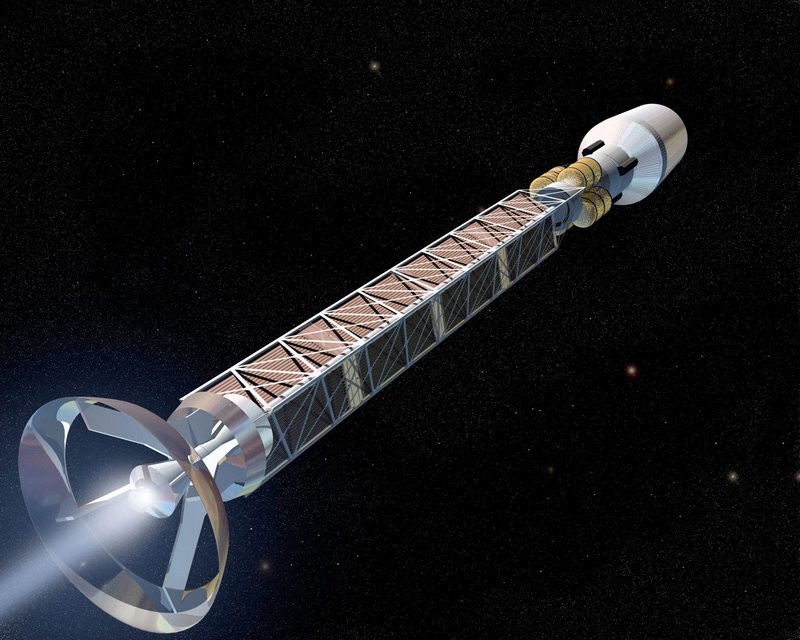
“Anti-matter rocket”

To put that further into perspective, our present trouble is that an even modestly ambitious interstellar space travel program would require a mass production line of McHappy Meals.


UPDATE

By the way, the double entendre of “kind of makes you feel small” in juxtaposition with the ‘phallic’ imagery has only just now occurred to me. It was either completely unintentional, or unconscious expression of a deep-seated anxiety. But, as Freud once said, sometimes a cigar is just a cigar.

Labels: , ,

Wednesday, January 18, 2012

CSIRO and internal peer review

A “peer-reviewed” CSIRO study has apparently found “much stronger public support for wind farms than media coverage of the issue would suggest.”

Naturally a news report like that would demand scrutiny down at Southbank, where Andrew Bolt only yesterday gleefully reported a study from Spain that suggested Spanish wind farms “might” kill millions of birds annually.

Sure enough, Bolt seized upon a detail in that news item that a CSIRO scientist (and deputy director) was “one of the reviewers of the report.”

“Pardon?” Bolt asked. “CSIRO peer reviews its own work?”

Smitham may well be a meticulous reviewer, but having peer reviewers so close to the authors does not seem to me to be a wise way to guard against group-think.

That's a fair point — not withstanding Bolt’s motives in querying this CSIRO study are as predictable as his accepting, on face value, the Spanish bird-kill study.

So, come on Andy! You're a journalist, aren't you? You can contact them to... you know, find out the troooth!

It took me all of half a minute to google that CSIRO project team’s particulars, then a couple of minutes to shoot off an email to the designated contact person asking for clarification. By this afternoon, I had my answer.

Bolt, in an update to his post, seems to have tentatively settled on his own answer, suggested by one of his readers — it was simply a case of "misreporting".

He’s wrong.

I was informed that CSIRO reports are generally reviewed by CSIRO staff who aren't part of the specific project team, but who have expertise in the field, and who will frequently have had experience reviewing work by other scientists outside of the CSIRO. Further external review may be solicited if the work is to be published in external journals.

There it is, Andy — scooped ya! Thanks for the lead.

So yes, it's possible that such a process of ‘internal peer review’ (as my CSIRO contact frankly put it) could make the CSIRO’s work prone to something like “group think”. It would require a rigorous regime of internal checks and balances to address that risk.

If that isn’t already the case, then beefing up the review processes for their published work would certainly improve the CSIRO brand.

Labels: , , ,

Tuesday, December 06, 2011

O brave new climate!

For his final TV show of the year, Andrew Bolt had tantalisingly promised his followers “a mention of Tim Flannery.”

So naturally I had to tune in, hoping for his sake he wasn’t going to run with Bunyip’s failed gotcha on Flannery, to which he’d given such prominence on his blog. In the event, he took a somewhat different angle. Phew!

Bolt sought to ease our Flannery-inflamed anxieties by emphasising three points. (See youtube video. Note: creepy presenter warning.)

First,

  • With the expected increase in Australia’s population this century, you’ve got to expect some increase in the number of “weather-related deaths” anyway.

True enough so far as it goes, and we eagerly await the release of Doctor Easychair’s study into what the actual real numbers will be.

Second,

  • The “death estimate” presupposes the world warming by “an incredible four and a half degrees this century, when it hasn’t actually warmed for the last decade.”

The supposed absence of warming over the last decade to which he refers is, of course, a recurring fancy of climate change ‘sceptics’ everywhere.

Also noteworthy is that the study he refers to, published in 2008* (way before Flannery was appointed to the Climate Commission), actually considers various public health outcomes, aside from ‘death estimates’, across a range of scenarios.

For his third point, Bolt quoted a snippet from that study:

This assessment does not quantify the extent to which future adaptation to climate change will modify the levels of death...

The document itself continues,

..., injury and ill-health for each health outcome. It will be difficult to make confident quantitative assumptions about the potential adaptive consequences...

“Difficult”? Not for our Doctor Easychair, who confidently gushes his third point:

  • “This death estimate comes from researchers who admit they didn't allow for us getting richer and smarter, so much better able to adapt to the new climate. You know, being able to afford better cures, better disease prevention. Cheaper air conditioning!”

Yay, we’re saved!

While we eagerly await the details of Doctor Easychair’s confident quantitative assumptions about our adaptation to this “new climate” — which he may or may not believe in anyway, who can say? — still the prospect of unspecified cures and cheaper air conditioning is welcome relief after all that scary stuff.

And it’s not unreasonable to expect Doctor Easychair will next solve other problems such as war, famine, and... oh, let’s throw in cold fusion and teleportation.


* Garnaut Climate Change Review, June 2008, “The impacts of climate change on three health outcomes: temperature-related mortality and hospitalisations, salmonellosis and other bacterial gastroenteritis, and population at risk from dengue.” Available as PDF document from the Garnaut Review website.


UPDATE

Yep. Andrew Bolt really does believe it’s all about him. On a video of a discussion between Robert Manne and Tim Flannery, he observes:

I’m mentioned so often by the two alarmists that I wonder why they didn’t simply invite me along to have the debate they’d promised.

Promised debate?

Latrobe University, which hosted the event on August 12 this year, billed it as “A Conversation between Tim Flannery and Robert Manne.”

It’s the youtube hosted version (posted, it says, 1 day ago) that for some reason titles it as “Robert Manne vs. Tim Flannery,” with the description, “Robert Manne debates Tim Flannery.”

Anyway, I had to wait 17 minutes for the first mention of Bolt (17:27), then 23 min (40:10) during which Greg Sheridan came up (33:58). Then he was mentioned once during the Q/A where Manne imagined a hypothetical debate between Bolt and Phillip Adams (1:07:55).

So that’s three very brief mentions in over 80 minutes. None of those mentions related to any particular point of science because the focus of the conversation was on Flannery’s role in communicating his brief as Climate Commissioner.

Manne and Flannery did have a number of points of difference, but they maintained the discussion in a spirit of civility (so often missing in political discourse, so Bolt is always saying).

It’s a pity our Doctor Easychair only has ears for himself, because he’d seem to have missed out on hearing a thoughtful, wide-ranging discussion.

Why wasn’t he invited? I guess because it was intended as a thoughtful, wide-ranging discussion.

Labels: , , , , , ,

Friday, December 02, 2011

Bunyip’s failed Flannery gotcha

The Australian government’s Climate Commission this week released a controversial report projecting “impacts of climate change on the health of Australians.”

The report was launched by Chief Commissioner Tim Flannery, which was duly reported in The Australian. From among the report’s projections, the paper reported:

Without international action on climate change to limit temperature rises to [2 degrees celsius], the number of predicted temperature related deaths in Australia is predicted to rise from just over 6000 in 2020 to about 10,000 in 2070.

Admirably taking this statement with a sceptical grain of salt, blogger Professor Bunyip armed himself with “a pocket calculator and a copy of some recent Bureau of Statics [sic] projections” to set about testing the Climate Commission’s predictions.

In 2020, according to the ABS, Australia will be home to some 30 million people, of which Flannery insists roughly 6000 will be carried off by dengue fever and other curses that thrive in the heat. By 2070, the same ABS projection posits a likely population of between 46 million and 54 million, depending on which curve you choose to track.

So let’s see how that works out: 6000 deaths per 30 million means a 1-in-5000 chance of being done in by nasty weather as of 2020.

And 10,000 deaths in a 2070 population of 54 million? Well that comes in at 1-in-5400 climate casualties.

So the warmer it is, at least by Flannery’s reckoning, the safer and healthier we will be.

Neat... except Bunyip has made a couple of erroneous assumptions — one trivial, and one that’s somewhat more serious.

Trivially, he attributes the “reckoning” to Tim Flannery, when in fact the report’s authors are Lesley Hughes and Tony McMichael. (Hughes is a commissioner with the Climate Commission, and head of the Department of Biological Sciences at Macquarie University. McMichael is professor of population health at Australian National University.) True, Flannery as Chief Commissioner did launch the report, but the centrality attributed to Flannery by Bunyip and his fellow travellers is about an agenda.

More serious, however, is Bunyip’s simplistic (albeit pocket calculator-friendly) assumption that the health-related effects of hotter temperatures will be linearly uniform across Australia.

Whereas the modelling from Hughes & McMichael is somewhat more complex:

Under a worst-case scenario, unmitigated climate change may modestly reduce temperature-related deaths in Victoria, Tasmania, South Australia and NSW . . . but deaths could increase markedly in Queensland and the Northern Territory.

That’s an actual quote from the report that was in the article Bunyip relied upon for the above, so he has no excuse other than agenda-driven zeal.

So, Bunyip will need to factor into his calculations some sort of inverse differential between Qld/NT and the other states and territories, based on population projections for each, factoring in some assumptions about relative risk in each, etc. etc. etc.

The take-home message of Bunyip’s foolishness is that modelling of complex systems is ... well, complex ... and requires somewhat more than a pocket calculator and an agenda.

Oh, and beware when someone like fact-averse Andrew Bolt thinks well of you.


UPDATE 06/12

Bunyip has rebutted my remarks here in an update to his post, in which I’ve been soundly bitch-slapped, had my arse ass handed to me on a plate, whilst simultaneously having it kicked, on my way out the door. That’s fixed my little red wagon, yessah, and I won’t be dragging my arse ass back in a sling for more, nossah!

Kidding. He called me some names and had a little whine about standards.

Labels: , , ,

Wednesday, October 12, 2011

Andrew Bolt pays “very great respect indeed”

And why would he not, when the payees are three actual scientists who have aligned themselves with his crankish views on climate science?

Bolt’s dubious praise is actually a petulant expression of spleen in response to a feisty defence of orthodox climate science by Australia’s Chief Scientist, Professor Ian Chubb.

From the outset Bolt refuses to dignify Chubb with the title ‘Professor’, referring to Chubb simply as ‘Mr Chubb’ in the heading of his post.

He then introduces a video of his interview with his three tame scientists with the following:

... here’s a video of me paying very great respect indeed to three scientists who do agree with Chubb on one thing — that scientists like them are indeed treated with contempt, but not by the people Chubb means ...

Yep, “vewwy gweat wespect indeed” — that ought to fix Perfessor Chubb’s little red wagon.

Well then, what did Professor Chubb say to provoke such a puerile, tongue-poking performance from our good Doctor Easychair? Perhaps it was this bit:

[Chubb] also attacked “entertainers” in the media who had the privilege of an audience but not the responsibility to go with it. “For many in the media and politics and for the plethora of so-called commentators, undermining science is becoming an increasingly popular pastime,” he said.

Note that Chubb wasn’t specifically referring to Bolt as one of those ‘entertainers’, but — since clearly everything’s about him — Bolt has clearly taken to heart what he regards as a stinging jibe.

Notwithstanding his doomed efforts at fact-based commentary — which sadly requires a competent grasp of actual facts — I do hope Doctor Easychair comes to realise what an honourable thing is the role of entertainer in our lives.

On this blog alone, his endearing antics have been the subject of around two dozen out of 800-plus over almost 6 years. And his contribution to the wider blogging community is inestimable.

Labels: , , , ,

Wednesday, November 10, 2010

Point missed

One of the best moments in the ambitious-but-patchy Charles Darwin biopic Creation:

Charles Darwin:I have been writing a book.
Doctor Gully:Madness! There are far too many of those already!

If he’d only known the content of the book Charles had been writing, Doctor Gully’s response would likely have been more along the lines of... “May God have mercy on your immortal soul, sinner!”

Labels: , ,

Tuesday, June 08, 2010

Lowlife on Saturn

Scientists have apparently found life on Saturn ! !

Which is to say, they’ve found evidence of life on one of Saturn’s moons, called Titan.

Which is an imprecise way of saying they’ve found evidence which may suggest the possibility of a form of life on Titan.

Oh, alright, it may even be only a ‘precursor’ of life.

This ‘life’, it is thought, will possibly be methane-based — which should immediately ring alarm bells about “us” being invaded by “them” for the growing stockpiles of methane we’ve horded in our atmosphere.

The existence of exotic forms of life in the outer reaches of our solar system is a possibility Arthur C. Clarke foresaw at least three decades ago. In his sequel to 2001 A Space Odyssey, Clarke told of how the Bowman Entity descended into Jupiter where he/it discovered life-forms based on the petrochemicals in the atmosphere of the gas giant.

Skirting the foothills of the drifting foam mountains were myriads of small, sharply-defined clouds, all about the same size and patterned with similar red and brown mottlings. They were small only as compared with the inhuman scale of their surroundings; the very least would have covered a fair-sized city.

They were clearly alive, for they were moving with slow deliberation along the flanks of the aerial mountains, browsing off their slopes like colossal sheep. And they were calling to each other in the metre band, their radio voices faint but clear against the cracklings and concussions of Jupiter itself.

Nothing less than living gasbags, they floated in the narrow zone between freezing heights and scorching depths. Narrow, yes — but a domain far larger than all the biosphere of Earth.

They were not alone. Moving swiftly among them were other creatures so small that they could easily have been overlooked. ... But they too were alive — perhaps predators, perhaps parasites, perhaps even herdsmen.

A whole new chapter of evolution ... was opening before him. ...

He was searching a world more than a hundred times the area of earth, and though he saw many wonders, nothing there hinted of intelligence. The radio voices of the great balloons carried only simple messages of warning or of fear. Even the hunters, who might have been expected to develop higher degrees of organisation, were like the sharks in Earth’s oceans — mindless automata.

And for all its breathtaking size and novelty, the biosphere of Jupiter was a fragile world, a place of mists and foam... Few of its constructs were more substantial than soap bubbles...

Jupiter was an evolutionary cul-de-sac. Consciousness would never emerge here; even if it did, it would be doomed to a stunted existence. ... In an environment where fire was impossible, and solids scarcely existed, it could never even reach the Stone Age.

  • Arthur C. Clarke — 2010 Odyssey Two

So... the Bowman Entity at the behest of his/its Masters nuked Jupiter, with all its living wonders. They had it coming.

Labels:

Friday, April 09, 2010

That nails it!

Another shade of Grayling...

“Try lighting your house by prayer, instead of by electricity, and you see which one works.”

After that killer blow, is there anyone anywhere who can not be an atheist now?

Labels: ,

Wednesday, April 07, 2010

The atheists have taken over the cathedral

Or perhaps, the Cro-Magnons have taken over the cave...

The origin of Science and the origin of Religion share a common ancestor. It’s not that science emerges from religion... The common ancestor of religion and science is ignorance.

You can regard the relationship between religion and science, as they evolved separately from this common ancestor, as somewhat like the relationship between Cro-Magnon man, which is us, and the Neanderthals, which is them.

Labels: ,

Friday, February 26, 2010

Vintage Book Friday

The Wonders of Life on Earth
By the Editors of LIFE and Lincoln Barnett
Special Edition for Young Readers
Text Especially Adapted by Sarel Eimerl from the Original Version
(Life Books / Southern Cross International, Sydney, 1965)

I received this book as a Christmas present when I was 10 or 11. This was a superb gift for a child of around that age. Aside from the engagingly written text, the book is lavishly illustrated with photographs and other artwork. The proverbial treasury!

As it turned out I lost the book sometime in the years I was growing up, but back in January this year whilst holidaying around the Gippsland Lakes, I happened upon a reasonably well-preserved copy in an opp-shop at Lakes Entrance. The hard cover is a bit dog-eared and worn in places, but the pages inside are by and large in excellent condition. Naturally I snapped it up immediately.

I want to restore the cover to make it somewhat more robust so I can give the book to my great-nephew when he’s a bit older. Before that, however, I should probably review the text to ensure there are no glaring anachronisms in the science that may have been superceded since the 1960s.

The three-page fold-out, below, depicts Fernandina Island (referred to in the book by its former English name, Narborough Island) of the Galapagos group, overshadowed by La Cumbre volcano, perhaps much as Charles Darwin might have seen it in 1835 (had he actually visited that particular island, which to my knowledge he hadn’t).

Next, a two-page spread detailing various denizens of the Amazon rainforest.

There’s some enchanting detail in the broader panorama, such as the little howler monkey tugging the tail of a coati-mundi (who seems to be saying, “Hello, breakfast!”).

Labels: , ,

Tuesday, December 01, 2009

Minchin’s healthy scepticism

Following his defeat in this morning’s Liberal leadership spill, Joe Hockey has said:

“I am not a climate change sceptic. I am someone who believes the Earth deserves the benefit of the doubt.”

Meanwhile, Hockey’s party colleague in the Senate, Nick Minchin, has made no bones about his climate change scepticism.

Senator Minchin apparently has a proven track record in healthy (cough, cough) scepticism; notably, in 1995 he dissented from the majority report of a Senate committee investigating the cost of tobacco related illnesses.

“Senator Minchin wishes to record his dissent from the committee’s statements that it believes cigarettes are addictive and that passive smoking causes a number of adverse health effects for non-smokers,” the committee’s minority report says. “Senator Minchin believes these claims (the harmful effects of passive smoking) are not yet conclusively proved ... there is insufficient evidence to link passive smoking with a range of adverse health effects.”

To support his claims, Senator Minchin drew on a study commissioned by the Tobacco Institute of Australia that “concluded the data did not support a causal relationship between exposure to environmental tobacco smoke (ETS) and lung cancer or heart disease in adults”.

Senator Minchin’s stance flew in the face of voluminous reports by the US Surgeon-General, the US Environmental Protection Agency and the Australian National Health and Medical Research Council, documenting nicotine’s addictive hook and the serious health risks for people exposed to secondary cigarette smoke...

I won’t hold my breath waiting for some enterprising journo to ask Sen Minchin whether he now still believes smoking is not addictive.

Labels: , , ,